Loading...


Stone Setting & Replacement
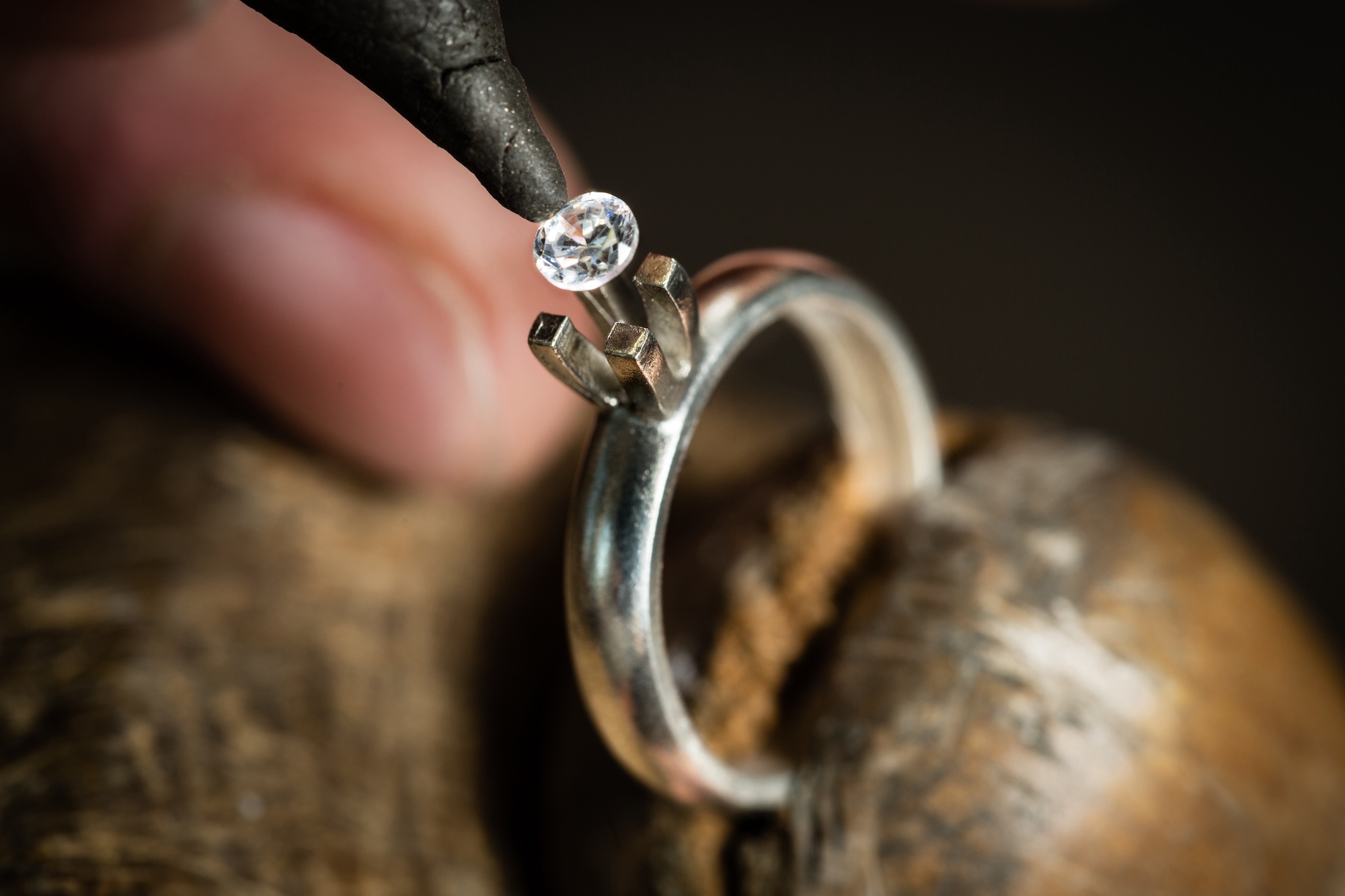
An almost infinite range of stones available to us enables expeditious completion of all types of intricate stone work.
Diamond sizes start from 0.005 points in full cuts right up to five carat, in various colours and clarities, both natural and lab grown.
We also have access to old cut and eight cut diamonds, another benefit of using us is our easy access to the London Diamond Bourse which is on our doorstep.
Working with unusual pieces of jewellery is one of our specialities, we have a stone cutting and polishing service to remove scratches and revitalise worn sapphires, rubies and emeralds and can set and finish all types of coloured stones, whether supplied by you, your customer or ourselves.
Stone Setting Styles
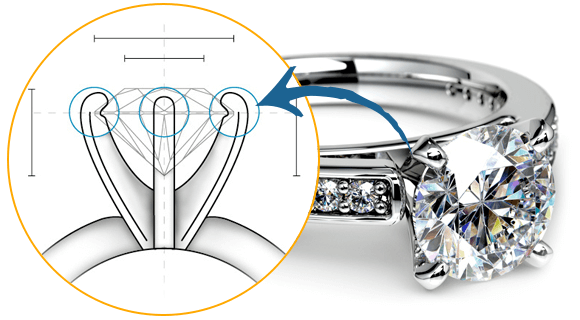
Prong Setting
The most commonly available ring setting is called the prong setting. A prong is a small metal claw that holds the diamond or other stone in place. Prongs can be rounded, pointed, flat, or V-shaped.
Most prong settings feature either four or six prongs; with the former you can see more of the diamond, the latter being more secure.
A benefit of this setting is that there is a minimum presence of metal, so that there’s more diamond to see and more light that can pass through the diamond, thus adding to its brilliance.
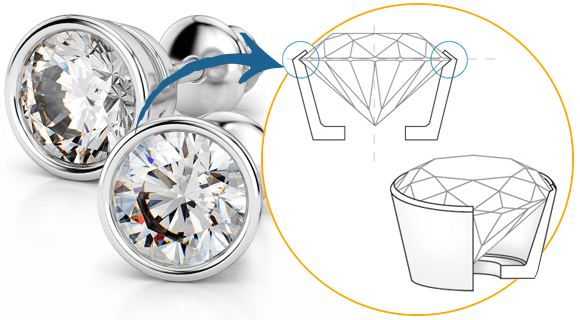
Rubover - Bezel Set
The bezel setting is the second most popular ring setting. Instead of holding the diamond with prongs, the bezel setting encircles the diamond, or centre stone, with a thin metal rim designed to hold the stone tightly in place.
A bezel setting can be a full or partial setting: a full bezel completely surrounds the diamond whereas a partial bezel leaves the sides open.
It’s a good choice for those looking for a ring that won’t snag and that will adequately protect the diamond.
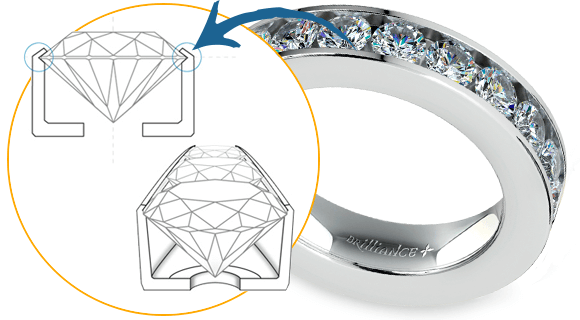
Channel Setting
The channel setting style is a secure way to set smaller stones in a row into the band of the ring, creating a channel of stones flush with the ring. Since the stones are not elevated, there is a less chance for damage or loss.
The stones, are set closely together into the groove of the channel and decorate the sides of the band or the entire band.
This setting is popular for wedding bands that feature only smaller stones and no centre stone.
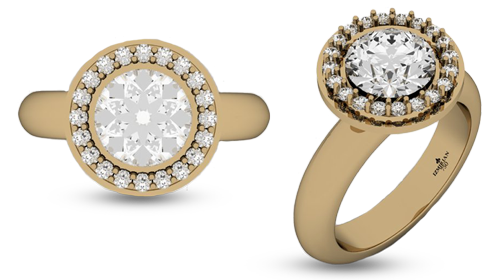
Halo Setting
The halo setting refers to the placement of stones in a concentric circle or square around a centre stone. The halo setting makes the centre stone appear larger, a great option to boost the appearance of a small diamond and it increases the overall sparkle of the ring.
A halo setting can be a way to save money on a smaller-carat diamond while not sacrificing the overall appearance of the ring. Consider also adding a halo of coloured gemstones or setting the halo diamonds with a different colour metal to create colour contrast.
Pave Setting
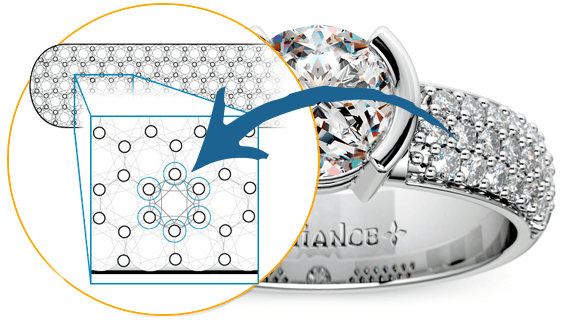
The pave setting, pronounced “pa-vay,” comes from the French word “to pave,” as in paved with diamonds. By setting small diamonds together the effect is one of a continuous band of sparkle.
This setting is also known as a bead setting and in the case of especially small stones, may be called a micro-pave setting. Diamonds are said to be pave-set when they are as small as .01-.02 carats and any smaller than that would be called micro-pave.


Telephone & Text 07703 697983
studio@abbevilleau.com


Registered in England 16310193
AbbevilleAU is the trading style of CAVU Design Ltd
© 2026 - CAVU Design Ltd